Northfield neighbors band together to restore local land
Interested in using more native plants in your garden, but not sure where to start?
Residents of The Crossing condominium complex in Northfield found themselves in a similar situation about ten years ago. After planting wildflowers on their own property, the condo association adopted an adjacent city-owned parcel full of patchy lawn, bare ground, and non-native plants with the goal of restoring the land. Residents decided to work with the City of Northfield and an independent contractor to replant the area with natives.
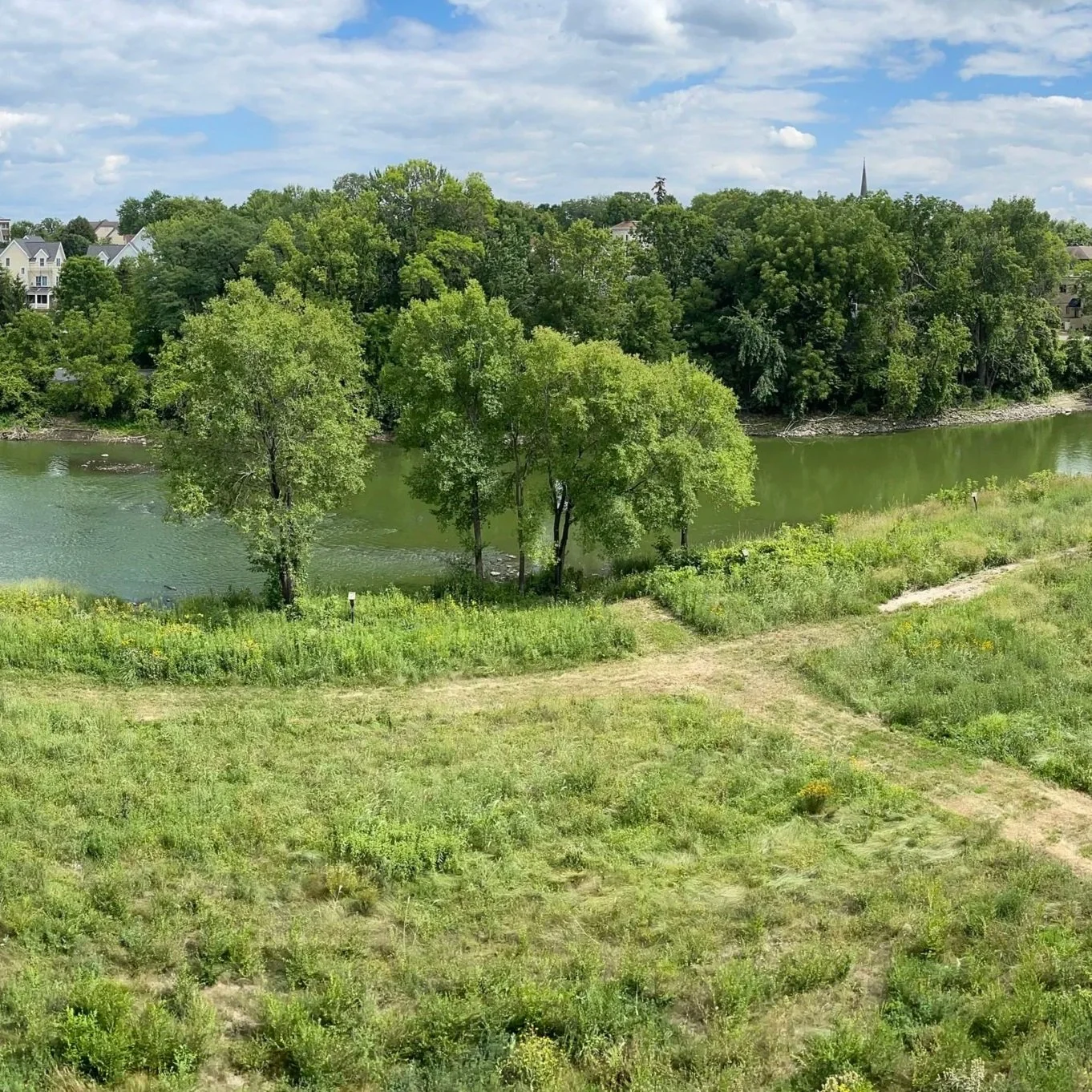
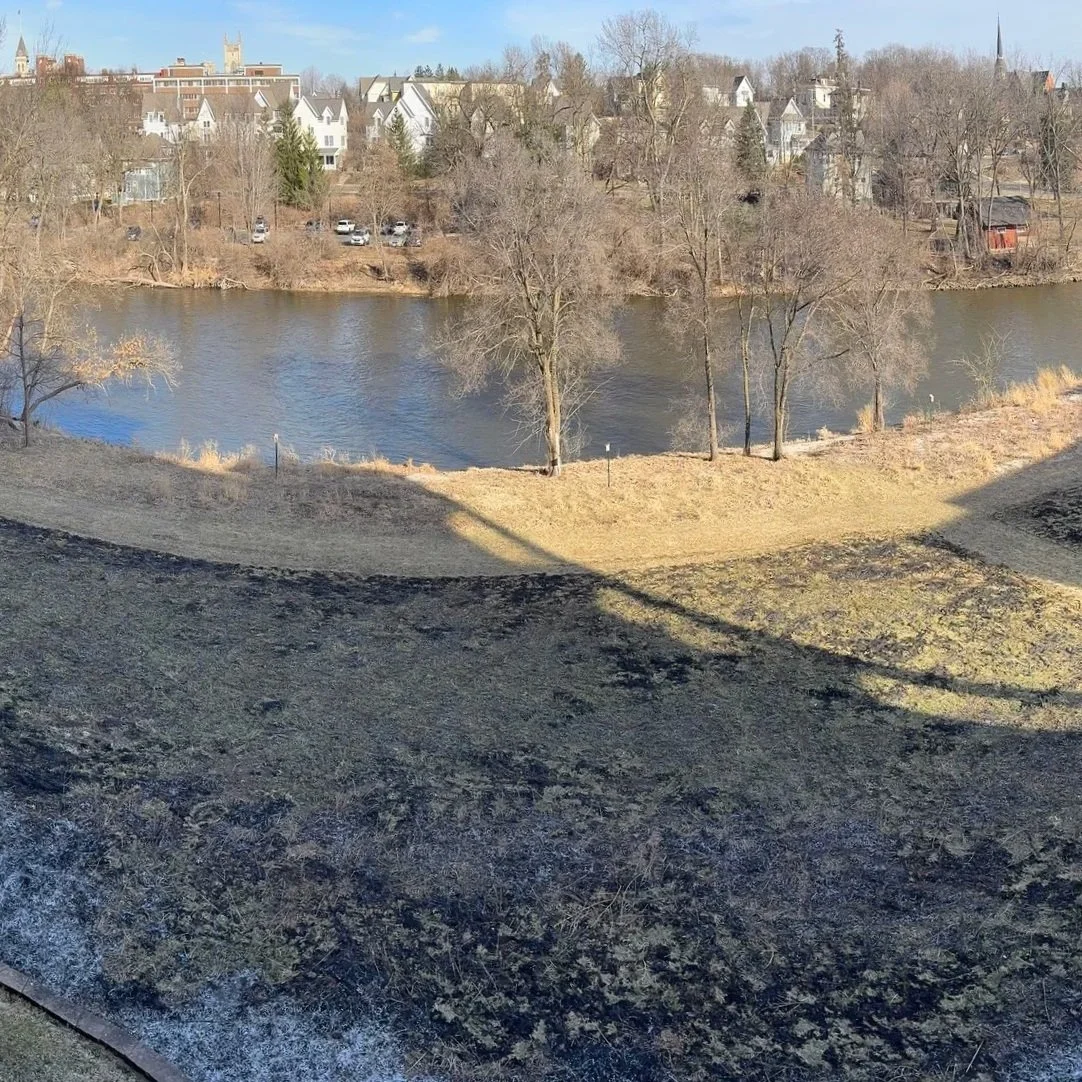
Image Description (above): The city property restored by residents of The Crossing before and after a controlled burn that will help to manage invasive plant species. Photo Credit: Paul Jackson
Now that the native plantings are well-established, members of the condo association gather to manage vegetation on the property just twice a year. This is because native plants thrive with minimal maintenance, as they are adapted to the local environment. Paul Jackson, member of the condo association and St. Olaf professor, puts it simply: “We don’t have to mow that!”
Replacing all or some of a traditional grass lawn with native plants reduces not only the need for mowing but also the demand for water, weeding, fertilizer, and pesticides. Many native species have deep roots that break up compacted soil and allow rainwater to soak into the ground. As such, planting natives saves time and money while helping to conserve water and prevent pollution.
While native plants are a great start, you also need to choose the right species for your particular space. For example, the city parcel adopted by The Crossing residents includes floodplains, or low-lying areas of land by a river that flood frequently. This means that plants need to be able to weather both wet and dry conditions.
Working with experts at Prairie Restorations helped The Crossing residents identify plants that would thrive. Prairie Restorations is a Minnesota-based company that provides restoration and land management services focused on native plants. They helped condo association members create a more resilient plant community on the land. The City of Northfield, on the other hand, takes the lead on shoreline management and ongoing maintenance needs.
Northfield residents interested in native plantings can find support from the city through rebates for native plants and rain gardens, a special type of garden designed to capture rainwater. The city will reimburse homeowners 50% of the cost of materials and rental equipment needed for rain garden construction up to $250. As for other native plantings, residents can receive a 33% rebate of up to $75 on native plant purchases. See the City of Northfield website for instructions to apply.
Looking for support in garden design and construction? The city may be able to provide consultation for property owners interested in applying for the rain garden rebate. To learn more, contact James McDermott, the city’s Water Quality Technician, at 507-645-3071.
There are also many other resources available for those looking to plant natives in their yard. Some residents, like those at The Crossing, may opt to hire an expert. Others might take a class such as the Landscaping for Clean Water course offered through Dakota County SWCD, or utilize online resources like Blue Thumb to support their DIY projects.
While it may require some initial effort, planting natives is a great way to beautify your yard while saving water, time, and money in the long run. Residents of The Crossing now enjoy strolling on walking paths through the new landscape that they have helped to create. The restored land “brings a sort of joy to everybody,” Jackson explains. “We get to look out at it as part of being in the [condo association], but at the same time, we’re trying to steward it for everyone.”