
Biochar is Only Part of the Story
Across the Cannon River watershed, people and organizations are coming together to care for the land in ways that are both practical and deeply rooted in history. A recent restoration event at Sharing Our Roots Farm in Northfield showed what that can look like in practice.
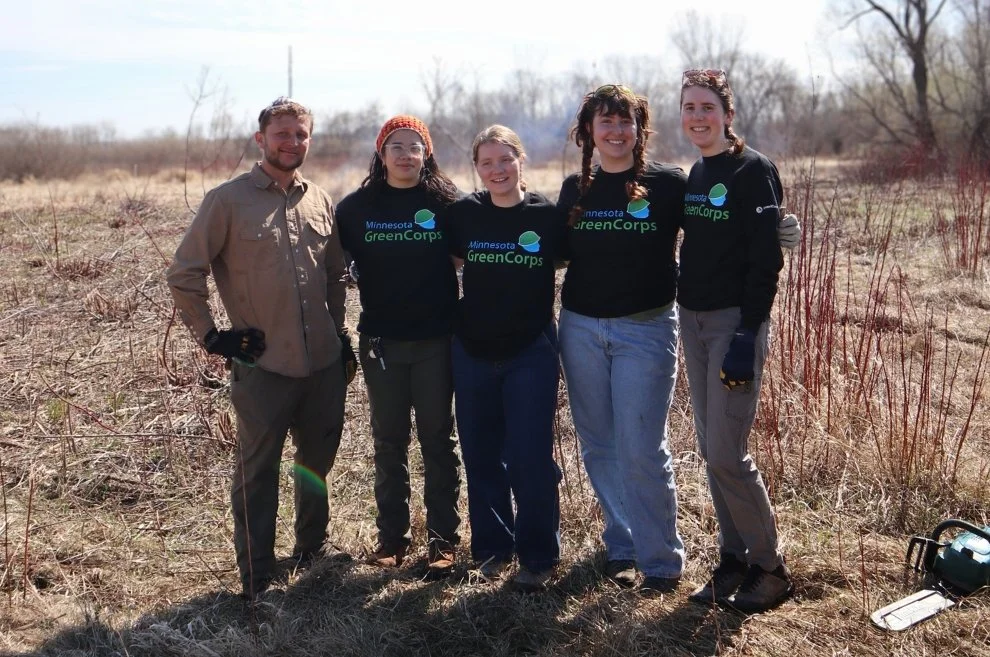
From left to right: Nic Nelson (Natural Lands Manager, Sharing Our Roots), Katya Del Mundo (GreenCorps Member, Water Resources Center), Nina Charlier (GreenCorps Member, Minnesota Landscape Arboretum), Charlotte Roos (GreenCorps Member, City of Eden Prairie), Emma Harte (GreenCorps Member, Clean River Partners).
Sharing Our Roots is a 163-acre farm and agricultural nonprofit that provides equitable land access to immigrant, BIPOC, and LGBTQ+ farmers and gardeners through affordable land sharing and community gardens. For more than a decade, the organization has worked to restore the property from a degraded cornfield into a thriving ecosystem shared by plants, wildlife, and people.
Part of that work includes restoring native prairie and wetland habitat.
“The wetland ecosystem at Sharing Our Roots has been without fire since colonization and without grazing since the early 90’s,” shares Nic Nelson, the Natural Lands Manager. “As a result, the remnant wetland ecosystem began to get choked out by brush.”
After clearing a wide swath of red osier dogwood, large amounts of brush and woody debris remained. Instead of burning the material in an open pile, where much of its carbon would be released into the atmosphere, the brush was placed into a specialized kiln and transformed into biochar.
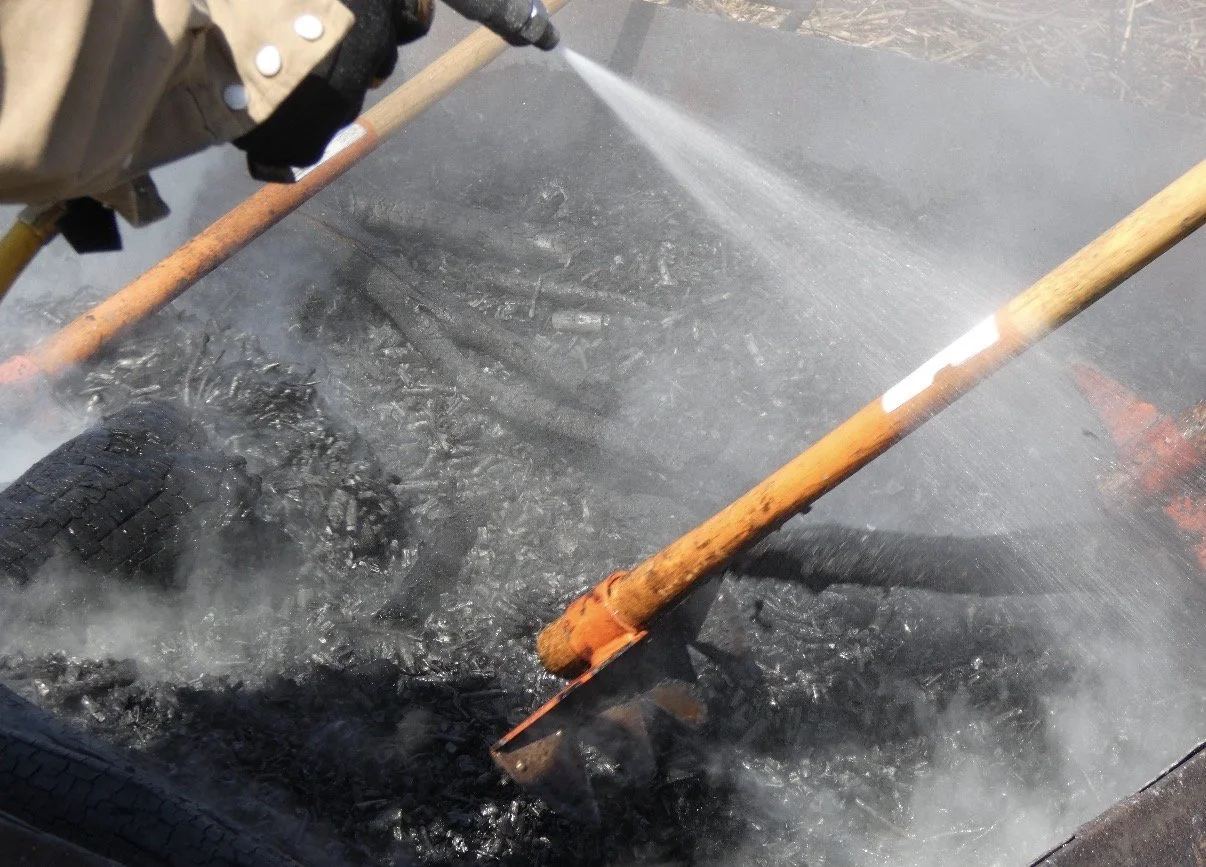
The finished product: biochar.
Biochar is a charcoal-like material made from organic matter such as wood waste or plant debris. It is created by heating that material in a high-temperature, low-oxygen environment, turning it into a stable form of carbon that can be added back into soil. Once there, biochar can improve soil structure, help the ground retain water, and make nutrients more available to plants. In some cases, it can even help remediate contaminated soil.
While biochar may sound like a modern innovation, similar practices have been used by Indigenous communities around the world for thousands of years, from the Amazon Basin to sub-Saharan Africa. These techniques helped build fertile soils that continue to support agriculture today. What we are seeing now is not the invention of something new, but a return to longstanding knowledge adapted to meet present-day environmental challenges.


The restoration event also became an opportunity for connection and learning. Clean River Partners invited several members of Minnesota GreenCorps to participate alongside staff and volunteers. Minnesota GreenCorps, coordinated by the Minnesota Pollution Control Agency, places AmeriCorps members with organizations across the state to help build community resilience and protect natural resources.
This is the second year Clean River Partners has hosted a GreenCorps member, and this year’s member, Emma Harte, has helped expand outreach and engagement across several programs. A naturalist and environmental educator, Emma also created opportunities for fellow GreenCorps members to experience hands-on restoration work in the watershed.
“I really enjoyed bringing other GreenCorps members to Sharing Our Roots and to my host site,” Emma shared. “I’ve learned a lot from serving at Clean River Partners so far, and the staff there have a really diverse range of expertise in the environmental field to offer, so it was great to be able to bring others in my cohort to experience it.”
For many who attended, the day offered both inspiration and a chance to learn.
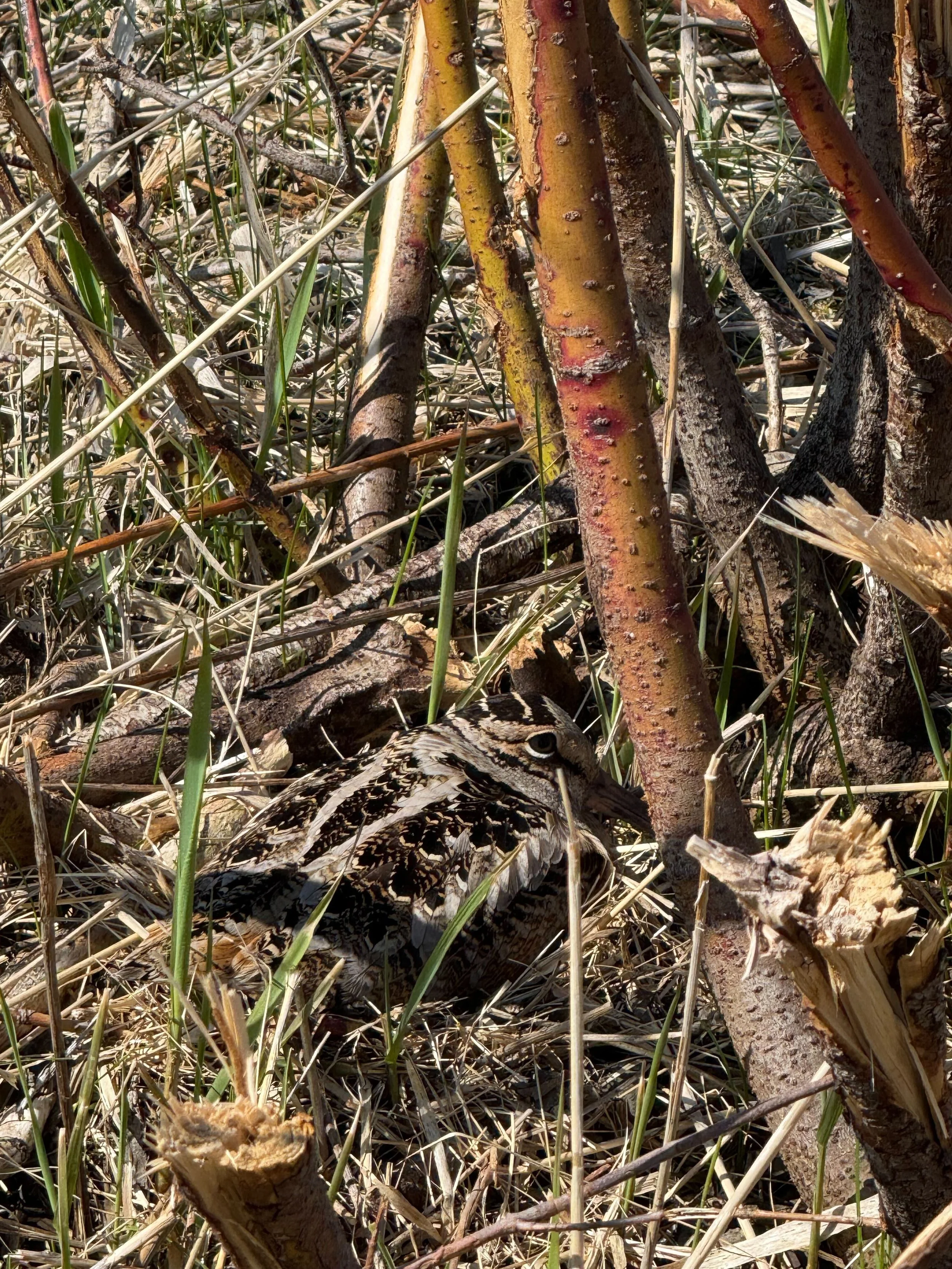
“My favorite part was seeing the space that Sharing Our Roots had and all of the wildlife,” said Charlotte Roos from the City of Eden Prairie. “Seeing a woodcock was the highlight of my week.”
Katya Del Mundo from the Water Resources Center reflected on the impact biochar can have on soil health. “I learned how biochar is important for soil health in agriculture. It helps soil become more efficient at water infiltration and provides nutrients from the organic material mixed in.”
Nina Charlier from the Minnesota Landscape Arboretum noted the care behind the farm’s restoration approach. “I was impressed that Sharing Our Roots is able to manage its natural areas without herbicide use. That takes a dedicated and organized team.”
For Emma, the experience reflected one of the most meaningful parts of GreenCorps service: the exchange of knowledge between people working in different parts of the environmental field.
“One of my favorite parts of GreenCorps is learning about environmental topics that I might not be exposed to otherwise,” Emma said. “Since my service projects focus on outreach and education, it was cool to hear about the land management work Nina and Charlotte are doing. They had such good questions about biochar and other management practices at Sharing Our Roots that I would never have thought to ask.”
Moments like this show how restoration can be regenerative in more ways than one. Knowledge moves between people, across organizations, and out into the community. Each conversation builds on the last.
Nic has been creating biochar on the farm for several years. This particular batch will be donated to the Carleton Farm, a student-run 1.5-acre organic farm in Northfield at Carleton College. Students will study how biochar affects soils in our region, helping build a better understanding of how it might support local agriculture and restoration efforts in the future.
In the end, biochar is only part of the story.
What matters just as much is the way people come together to learn, to teach, and to care for the land. When that happens, the impact reaches far beyond a single field or a single day.
