Zebra mussels in the watershed
The sun is out, the birds are singing, and the water is crystal clear. For most Minnesotans, it’s the picture-perfect summer day. But beneath the surface of Lake Byllesby, an unwelcome newcomer is settling in.
The news broke on September 19, 2025: a survey confirmed that zebra mussels had officially appeared in the east end of the lake. And, just one month later, they were found in several new locations, proving they are spreading rapidly.
But what exactly are these tiny creatures, and why is their arrival such bad news? Here is everything you need to know about these new pests and what they mean for our water.
What are Zebra Mussels?
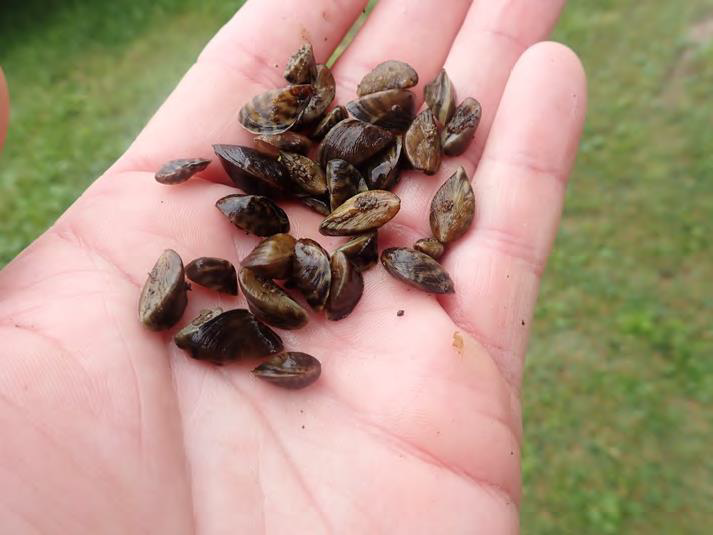
The zebra mussel (Dreissena polymorpha) is a small shellfish named for the dark, zig-zagged stripes on its shell (Source 1). While they are only about the size of a fingernail, they can quickly take over an ecosystem (Source 2). Once a female is two years old, she can release up to a million eggs per year, leading to tens of thousands of mussels occupying just a single square meter (Source 3, Source 4).
Zebra mussels are an invasive species (Source 5). Invasive species are non-native organisms that harm the environment by outcompeting local wildlife (Source 6). Originally native to the Caspian and Black Seas, they have spread throughout Europe and the United States (Source 5). They were first found in North America in June 1988 in Lake St. Clair (Source 7). Just one year later, they reached Minnesota’s Duluth/Superior Harbor (Source 4). As of June 2025, they’ve been confirmed in 378 Minnesota lakes and wetlands, affecting roughly 5% of the state's 11,842 lakes (Source 8).
How do Zebra Mussels Spread?
High reproduction rates helped zebra mussels take over, but human activity is the main reason they are able to move so easily. They likely arrived in the U.S. stowed away in the St. Lawrence Seaway shipping routes via ballast water, which is pumped into empty cargo ships to provide stability (Source 1).
However, ballast water might not be the only way zebra mussels arrived in the U.S. Some researchers believe they were introduced via ship chains and anchors. Zebra mussels are unique among freshwater mussels because they use a kind of rootlike fiber to glue themselves to hard surfaces (Source 5). Because they can survive out of water for several days, clusters can easily hitchhike on equipment and drop off into new freshwater ports (Source 9, Source 10).
What do Zebra Mussels Do?
With zebra mussels now in Lake Byllesby, it is likely only a matter of time before they show up in other bodies of water throughout Goodhue and Rice counties. Because the Cannon River connects so many areas, these mussels can spread quickly.
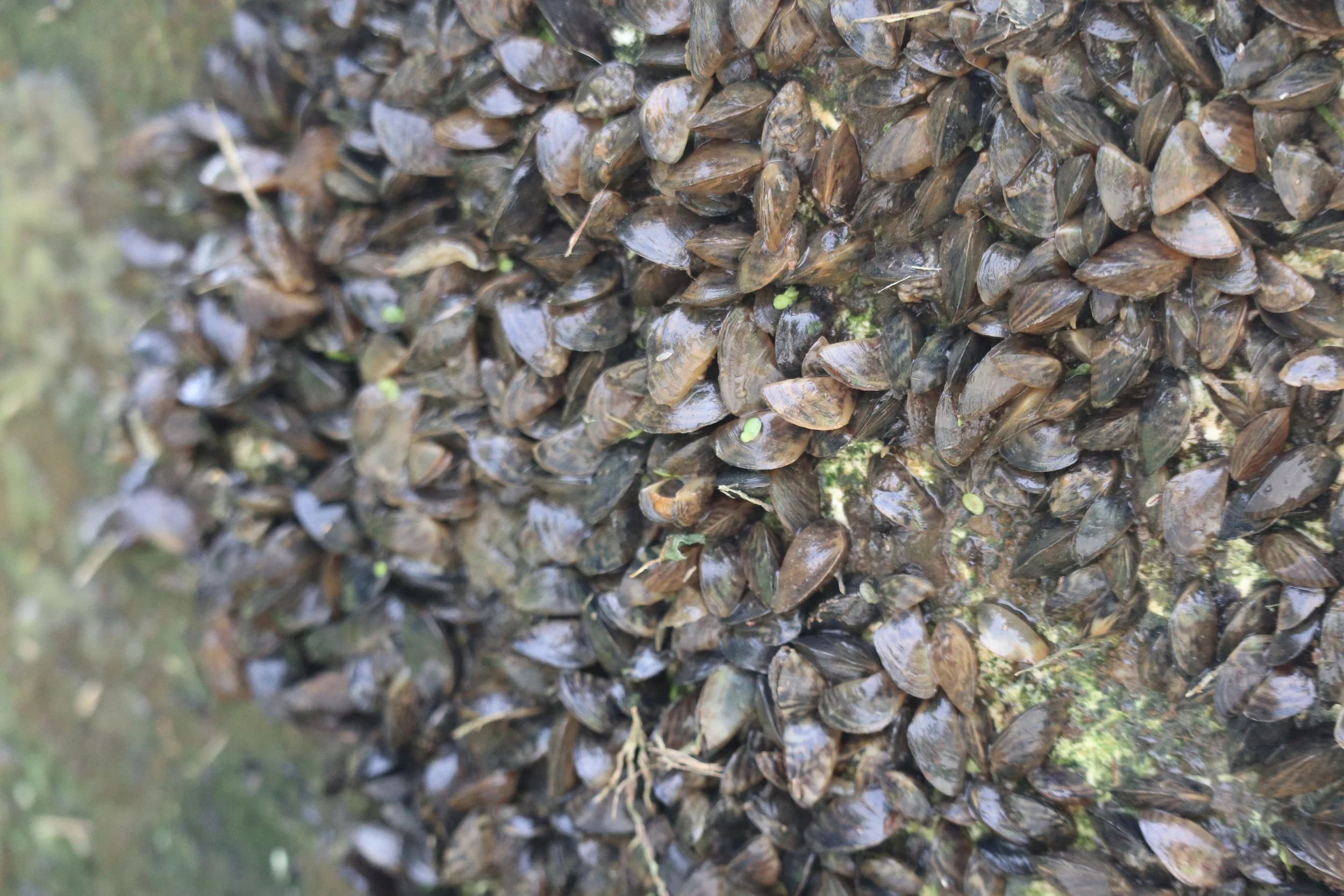
Now it’s one thing to hear they’re “bad news,” but it’s another to see how zebra mussels actually change the landscape of our lakes and rivers. The trouble usually starts with “biofouling,” wherein thousands of adult zebra mussels pile up and coat every underwater surface they can find (Source 5). Boaters often see the results of this firsthand. After sitting in an infested lake for a summer, a boat’s hull, propeller, and even its internal engine components can become covered in mussels (Source 11). This doesn't just hurt the boat's performance, it often ends with a hefty bill from the mechanic. The danger is even greater when the mussels aren't easy to see. A boat owner can unknowingly carry these hitchhikers to a brand-new body of water, starting the cycle all over again.
The same problem that plagues boaters also creates a massive headache for our local infrastructure. Facilities like power plants and water treatment centers rely on a constant flow of water from our lakes and rivers (Source 12). This pull draws larvae into the intake pipes, where they settle and grow into adults (Source 13). Fed by a steady stream of nutrients, the mussels pack together until they clog the pipes entirely, resulting in millions of dollars in damages and cleaning costs (Source 14).
While property damage is easy to see, the harm zebra mussels do to our aquatic habitats often goes unnoticed until it's too late. Zebra mussels aren't just an uninvited pest, they’re a threat to other life in our watershed. They frequently latch onto native molluscs (clams and other mussels) and turtles, sometimes smothering molluscs so they can no longer feed (Source 15, Source 16). They also fundamentally change how our lakes look and function. While a crystal-clear lake might look clean, it’s usually a sign that zebra mussels have stripped away the phytoplankton, the base of the entire food web (Source 17). This extra clarity allows sunlight to reach much deeper, which warms the water and fuels an overgrowth of weeds and algae (Source 16). As this plant matter dies and decomposes, it drains the oxygen levels in deep water (Source 16). This process can even trigger outbreaks of botulism bacteria, resulting in massive die-offs of local fish and bird populations (Source 18, Source 14).
What Can and Should You Do?
Whether you own lakeshore property, enjoy angling, or are a recreational boater, your daily choices are vital to the health of our watershed. Protecting these spaces requires all of us to play a part, from weekend boaters to major lakeside facilities.
For Water Users:
To stop zebra mussels from spreading, Minnesota law requires all water users, regardless of whether a lake is officially infested, to follow a strict cleaning routine before hitting the road.
Clean all lake plants and invasive species off your watercraft. Using warm, soapy water is highly recommended.
Drain all water by pulling your drain plugs. Keep them removed while you’re traveling.
Dispose of any leftover bait in the trash. Using bait fish that aren’t native to a specific lake can be just as harmful as zebra mussels.
Dry out your docks, boat lifts, and rafts for at least 21 days before you move them into a different body of water.
Never transport water in bait buckets or live wells from one lake to another. If you plan to collect bait or move water from a known infested area, you might need a special permit.
For Concerned Citizens:
While enjoying your time by the water, please remember to keep a watchful eye out for new infestations. Always report new sightings to the DNR by reaching out to an Aquatic Invasive Species (AIS) Specialist or submitting data through EDDMapS. To solidify your commitment, take a moment to sign the Pledge to Protect Minnesota Waters.
Finally, as you walk the beaches this summer, always watch your step and wear water shoes. Zebra mussel shells are incredibly sharp and being cautious can prevent severe cuts to your feet.
For Industrial Sites:
While industrial sites like power plants use chemical treatments to manage zebra mussels within their facilities, these options aren't usually approved for our open lakes and rivers. This means that in public waters, large-scale control is still rare and largely experimental. However, progress is still being made on the industrial front. Since 2015, the Minnesota DNR has approved various pilot projects to test new management methods, offering hope for more advanced solutions in the future.
Resources
Want to learn more about other invasive species? Take a look at the additional resources below.
Want to know if a body of water is infested so you can exercise more caution and help stop the spread? Check the MN DNR’s Infested Waters List.
Want to know about other aquatic invasive species? Check out this guidebook to learn more.