This article was featured in the Northfield News.
Last summer, we published an article about stormwater retention ponds and heard from readers with questions about plants, geese, and what a “healthy” pond should look like. To follow up, we spoke with two local stormwater specialists, Adam King of Faribault and James McDermott of Northfield. Here is what they had to say.
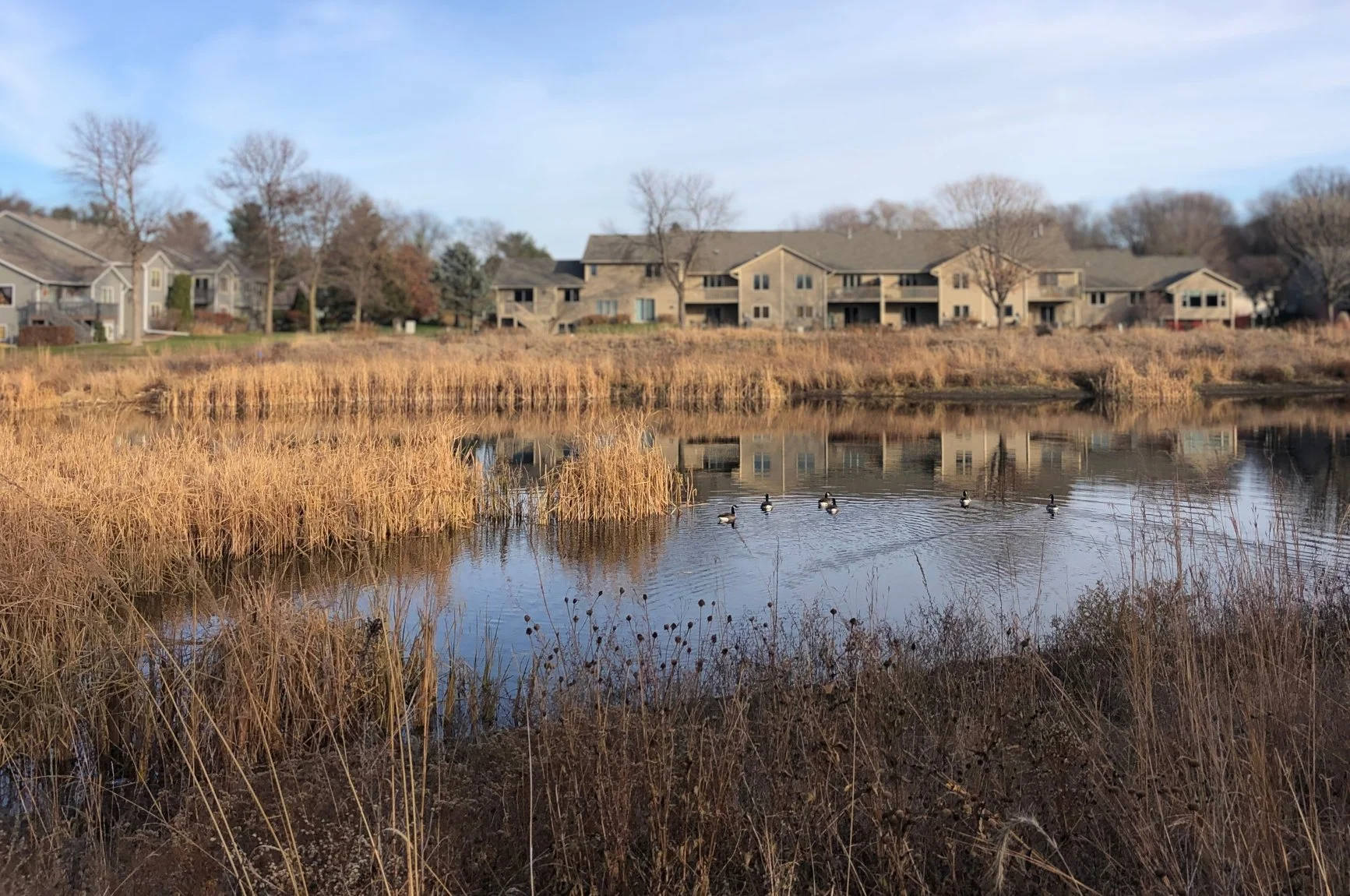
Photo taken by Emma Harte at Clean River Partners of a stormwater retention pond in Northfield, MN.
Q: Is it normal for stormwater retention ponds to fill with plants?
Yes. In fact, plant growth is expected.
“They’re retention ponds, they’re not lakes,” King said. Stormwater retention ponds are designed to capture nutrients and sediment from runoff before that pollution reaches rivers and lakes. Ponds are usually shallow, allowing sunlight to reach the bottom. That, along with extra nutrients like phosphorus and nitrogen, encourages plant and algae growth.
McDermott added that plants play an essential role. While they slightly reduce water storage capacity, they significantly increase the pond’s ability to trap nutrients, stabilize soils, slow water movement, and support organisms that help break down pollutants.
Plants become a concern when they block inlets or outlets, significantly reduce the pond’s capacity to hold water, or when one invasive species dominates. “If plants impact the flow of water into or out of a pond, or if the pond isn’t able to hold water, that’s our primary concern,” McDermott said.
Q: Should we be concerned about geese?
Stormwater ponds naturally attract wildlife, including Canada geese. They prefer open water and short grass, which makes many ponds appealing to them.
“Retention ponds are a source of water, so it’s natural that they would attract wildlife, including geese,” King said. While geese are not a sign of poor water quality, large populations can worsen it through added bacteria and nutrients from droppings.
Both cities emphasize prevention. The most effective long-term solution is leaving a buffer of unmowed native vegetation around the pond. This discourages geese and also helps filter runoff before it enters the water.
“Maintaining a natural shoreline buffer of unmowed, dense vegetation is the most effective long-term method for keeping geese from overpopulating a stormwater pond,” McDermott said.
Q: How can I tell if a pond is healthy and working properly?
A pond that looks murky or densely vegetated may actually be functioning as intended. Sediment buildup and plant growth often mean pollutants are captured rather than flowing downstream.
“If those sediments are making it to the stormwater pond, they’re not making it to the river or the lake,” King said. In summer, ponds can look unpleasant. “Sometimes they will get gross, and it kind of means that it’s doing its job.”
That said, a very polluted pond often reflects pollution in the surrounding area. Cleaner runoff leads to healthier ponds and less maintenance over time.
Residents can watch for visible problems such as blocked inlets or outlets, fallen trees, or noticeable sediment buildup that raises the normal water level. If those appear, McDermott recommends contacting the city.
Q: Who maintains these ponds, and how?
Ponds on public land are maintained by the city. Ponds on private property are maintained by the property owner. Maintenance includes inspections, clearing blockages, managing vegetation, and, much less frequently, dredging sediment.
Dredging projects can be expensive, often costing hundreds of thousands of dollars, and typically happen every 20 - 30 years, depending on sediment levels.
Q: What can residents do to help?
“Residents can help by preventing pollutants from reaching the storm sewer system,” McDermott said. That means raking leaves, sweeping grass clippings back onto lawns, picking up pet waste, limiting salt use, and washing cars at a carwash.
For those living near ponds, leaving vegetation buffers and reporting problems helps everyone. Stormwater retention ponds may not always be pretty, but they play a critical role in protecting local rivers and lakes.
Do you have additional questions about stormwater retention ponds? We encourage Northfield residents to reach out to James McDermott, the city’s Water Quality Technician, at 507-645-3071. Faribault residents can contact Adam King, the city’s Environmental & Water Resource Coordinator, at 507-209-3552.