Northfield Residents Save Water, Money Using Rain Barrels
Thinking about getting a rain barrel, but not sure where to start? Rain barrels can help you save on your water bill by capturing and storing rainwater from roof downspouts for outdoor reuse– and they require little time to install and maintain. To hear about this process firsthand, we spoke to two Northfield residents, Amy and Ed Smith, about their experience owning rain barrels.
Why use a rain barrel?
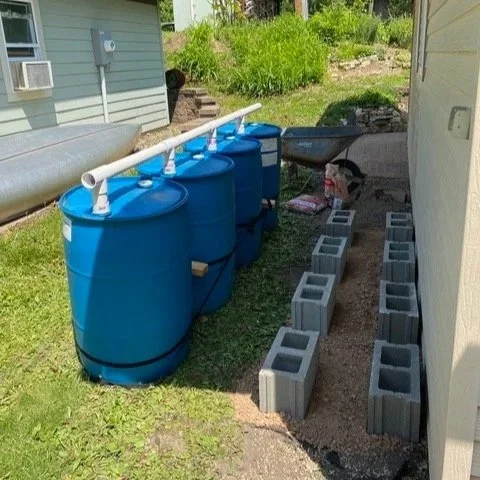
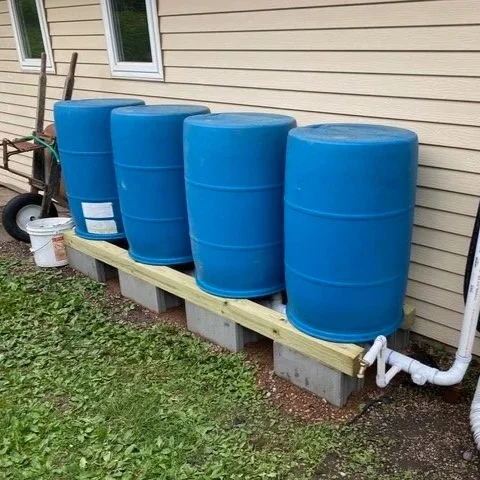
For Amy and Ed, the main motivation is saving money and conserving water. Just one 55-gallon rain barrel can save up to 1,300 gallons of water per year, or about $20-40 per month during peak growing season– and the Smiths have four barrels. “We got addicted to the free water,” Ed says. Like many rain barrel owners, they use the water they collect for gardening and planting trees.
Capturing rainwater also reduces stormwater runoff, or water entering storm drains after rainfall. This water flows directly into lakes and rivers untreated, often carrying pollutants with it. Rain barrels reduce runoff by intercepting water before it reaches the drain. Amy explains, “We live on a slope, so when there's heavy rain it just goes shooting right down the street and it's like, alright, let's slow down how much water is actually going into the storm drains.”
How do I install a rain barrel?
The Smiths installed their first rain barrels in 2007. The opportunity presented itself when their neighbor, Bruce Anderson, brought back a box truck full of bourbon barrels from Kentucky that he was converting into rain barrels and selling. Amy and Ed used the bourbon barrels to collect rain before replacing them with blue food-grade barrels in 2015.
To help pay for their new barrels, Amy and Ed took advantage of the $20 rain barrel rebate offered through the City of Northfield. Residents can claim up to three rebates per utility account. Amy describes the application process as “super straightforward.”
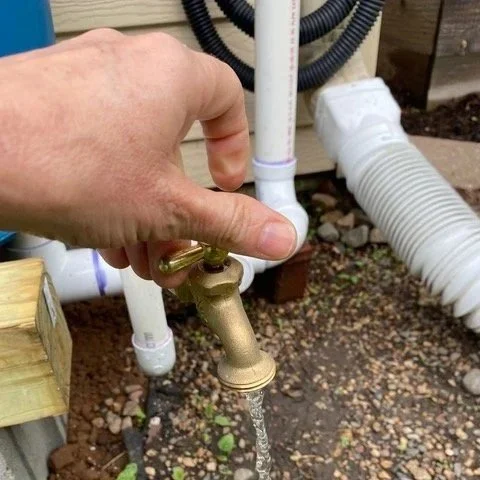
Installing the barrel is also relatively easy. The most important considerations are height and location. The rain barrel should be seated on a stable, flat surface at least six inches off the ground so that a watering can or bucket fits underneath the spigot. While the barrel can sit under any downspout to capture water from the gutters, the Smiths recommend choosing an easily accessible location for watering plants, such as near a garden. “Make it easy to use,” Ed says.
What are the maintenance needs?
Little work is required to keep a rain barrel running smoothly. A screen at the top of the barrel prevents mosquitoes from breeding in the water and blocks leaves and other debris. This screen must be cleaned periodically to avoid clogs.
When temperatures begin to drop in the fall, rain barrel owners should stop collecting rain and use up the water in storage. Emptying the barrels before the winter prevents ice from causing damage. This is also a good time to give rain barrels a quick rinse to remove sediment. Amy explains, “Spray it out, tip it upside down, get the sludge out, and then you're ready for the spring.”
Ready to get started?
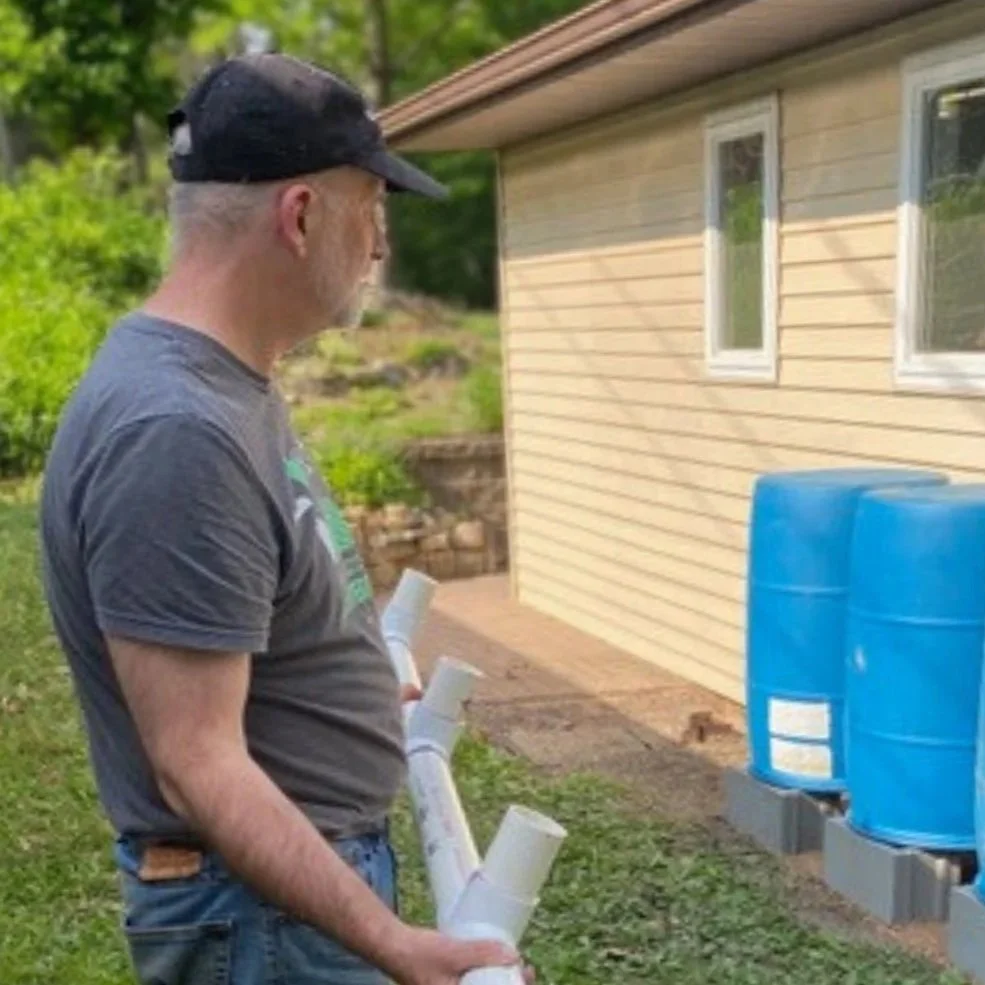
Rain barrels can be purchased ready-made or assembled at home from food-grade containers, if you’re willing to put in a little extra work to save some money. Amy and Ed recommend Gardener’s Supply Company for ready-made barrels and Menards for self-assembly. Their advice for someone looking to install their first rain barrel? Amy sums it up: “Make it easy to use, don’t let it freeze, clean it out, see if your community has a rebate.”